
BATTERY SEARCH
Enter your registration number



Car Batteries
Think you need a new car battery? Look no further than National Tyres and Autocare. We offer an extensive range of products from which to choose. No matter the fitment or vehicle type, you can buy the car battery that you need from us. Each of our 250+ centres nationwide is stocked with hundreds of batteries and ready to fit them – all at a date and time that's convenient for you.
Our battery range has an option for everyone and every car – affordable batteries built to high specifications through to premium batteries. The choice is yours. Our best-value batteries are made by Napa – innovators in technology who produce quality batteries for original equipment (OE) fitment. Whatever car battery you're seeking, start your search with National today.
Enter your registration number into our battery search lookup above to find the right option for your car.

How do I know if my car battery needs replacing?
Not sure if it's time for a car battery replacement? There are a number of warning signs for which to look out, including
- Dashboard warning lights: If either the battery warning light or the engine warning light is showing, this indicates that there is an issue – and you must get your battery tested ASAP. The engine warning light comes on because the battery provides low voltage to the car's computer. This will then trigger the engine and battery lights to come on.
- Trouble starting your car: As a car battery gets older, the internal components often start to erode, making it less effective. This is noticeable when you turn the key and your car engine is slow to start.
- Electrical issues or dimmed lights: Either of these will point towards an issue with a car battery. As a battery fails, it will lose its ability to power the car's electrical system.
How do I get my car battery tested?
At National, our technicians can carry out a FREE battery test. This only takes a few minutes – a quick and simple health check that can diagnose any underlying battery faults. The test involves checking the voltage, start capacity and condition of the battery.
A proactive car battery test can give you peace of mind and flag any potential faults before they become a problem.
The growing amount of in-car technology puts extra demands on your battery, too. If you have any issues with your car starting, try first turning off these features. This includes your heated windscreen wipers, mobile chargers, satellite navigation systems, heated seats, and heated wing mirrors – as well as any in-car infotainment systems.
Don't worry if our test reveals that you do need a car battery change. Our technicians are here to advise you on exactly the right option for your car.
How do we test car batteries and why?
Voltage
The voltage reading for a car battery should be 12.6 volts. If a reading shows lower than this, you'll need to recharge or replace your battery.
Start Capacity
As part of our test, we measure the starting ability of your battery from cold. It must maintain 7.2 volts at a low temperature – and the reading will be displayed as a % of the battery's start capacity. If the start capacity is below 75%, this indicates that the battery is starting to deteriorate. As such, you may experience problems with it.
General condition
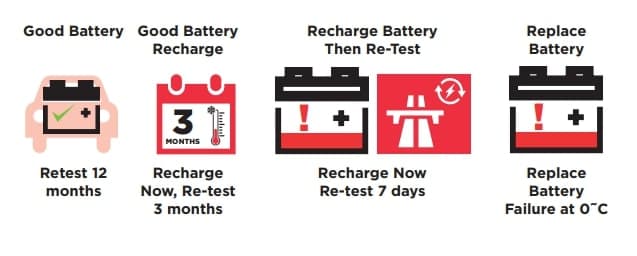
The results of a battery test will be displayed as:
- Good Battery – no action required
- Good Battery Recharge – the battery needs recharging. This can be done by taking the car for a 45-minute journey to allow the battery to recharge
- Recharge Battery then Re-Test – the battery is drained and in need of recharging. This will need to be re-tested again in seven days' time
- Replace Battery – the battery is entering the end of its service life, so we recommend that you consider a car battery replacement as soon as possible
What battery do I need for my car?
It can be so important to know which battery is right for your car. The simple answer is that it depends on your usage but, with modern cars, there's an increasing need to think about how much electrical equipment is used inside your car.
Your owner's manual will tell you what battery size you need for your car. We can also help if you're not sure. Just put your registration number into our search tool at the top of this page.
What are the different types of car batteries?
AGM (Absorbed Glass Mat) are sealed lead-acid batteries. These are designed for micro-hybrid cars that are manufactured with start-stop technology and other fuel-reducing technologies such as brake energy regeneration. These batteries do not leak due to a fibreglass mat, which absorbs any spilled sulphuric acid. Benefits include an increased life, lower CO2 emissions than AFB batteries, and better fuel efficiency.
AFBs (Advanced Flooded Batteries) are also known as ECMs (Enhanced Cycle Mats) or EFBs (Enhanced Flooded Batteries). This is an evolution of the standard wet flooded battery. They have increased cyclic performance and are designed for vehicles with start-stop technology.
The prestige Plus option offers heavy-duty performance that delivers an extra 30% power. It uses labyrinth technology that enables the flow of water back into the battery. In doing so, it maintains a constant level of fluid. The Plus battery supports models built with extra electrical items like satellite navigation systems and media players. Offering an increased shelf life, this car battery is also suitable for diesel engines.
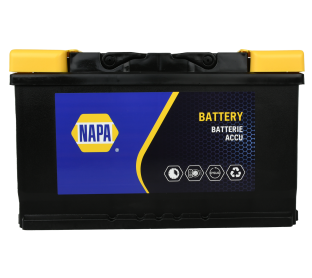
This is a flooded lead-acid battery that can be fitted to most cars. These batteries contain lead plates that react with the acid to store electricity when charged. Inside these batteries, there's an electrolyte that can leak out of the top of the battery through the caps if not stored upright. Made along with OE batteries, the NAPA range uses calcium technology. This offers a longer life, reduction in water loss, and more resistance to higher temperatures when it's under the bonnet. This battery is also suitable for diesel engines.
How much is a car battery?
The cost of a car battery varies depending on the type you need. At National, prices start from as little as £61. All our prices include fitting and disposal.
For better idea of how much your next car battery may cost, enter your registration number in the battery search tool above. It'll show you which options are best for your car and how much they'll cost.
We understand that motoring issues can be an unwelcome expense. To make them as bearable as possible, we offer unbeatable prices guaranteed with our Price Promise scheme and flexible payment options with our Payment Assist plans.
Why buy car batteries from National?
We know that it can cost a lot to keep your car on the road – and that it's essential to get the right parts at the right price. That’s why our aim is to provide the best value for money while offering excellent service and products that will last for a long time.
Here's why you can trust National when it comes to your car battery replacement:
- All budgets, all makes: We have car battery options to suit every situation and vehicle.
- Free battery check: Our battery health check gives you a chance to find out if there's an underlying fault with your battery that could become an issue.
- Value for money: You can spread the cost of your new car battery with our Payment Assist scheme, while our Price Promise means that we'll never be beaten on price.
- Nationwide coverage: We have more than 250 fitting centres located around the UK, so there's sure to be a branch that's local to you.
- Mobile battery fitting: We can come to you – at home or at work – and fit your battery at a time and place that suits you!
- Five-year guarantee: All batteries come with either a four- or five-year guarantee based on the type. The period for which you're covered will be printed on your sales invoice
Need help? Looking for more information? Please call us on 0808 256 5277.
Search by batteries by vehicle manufacturer here: Battery Search by Vehicle Manufacturer.
Car batteries: Essential FAQs
A car battery is a rechargeable power source needed to start a vehicle and power its electrical components at the press of a button or turn of a key. Without the battery, your car just won't start. Once up and running, it also continues to power various systems like stereos, dash-cams, sat-navs, phone chargers and external/internal lights – as well as all other electrical items.
Your car battery will recharge automatically as you drive it but, for this to happen, you'll need the alternator and drive belt to be in good condition.
Car batteries are usually located in the engine bay under the bonnet. In some cases, however, they can be found elsewhere – such as in the boot, under the floor.
Car batteries store a chemical form of electrical energy, then release it in a controlled way as a direct current. Some cars have start-stop technology, which is where the engine will turn off if the car is stationary. If your car has this feature, it still uses the battery to power its dashboard and in-car technology.
The failure of a car battery is a common reason for breakdown call outs. The reason why it’s such an important part of a car is because it generates the current to power the starting motor. Without it, the engine won’t start – and your car won’t move. The electrical system used to control your dashboard won’t work without your battery, either.
As you start your car, the first half-turn of the key fires up the vehicle. Lights on the dashboard will start to illuminate, the air vents can start blowing, and the radio will come on. This is down to the battery. Headlights or interior lights can also be switched on when the key is half-turned.
The lifespan of a car battery depends on a number of factors. This includes the type of vehicle, level of exposure to extreme weather conditions and your driving habits.
Related: Battery lifespan guide
Car batteries self-charge from a running engine. If a car is sat idle for some time, a battery will lose charge. This is more apparent in older batteries – but additional equipment such as alarms and immobilisers can also drain the charge of a battery.
If a battery is completely flat, the engine won’t turn over so the battery may need charging by using car battery chargers. These attach to the terminals of a car battery and charge it through the electrical mains. Terminals must be connected to the appropriate electrical lead. Not sure? Check your car's handbook or get it checked by a professional in one of our branches.
Yes – your car battery will start to charge if the engine is running. Of course, running any other electrical systems will still drain it.
A substantial amount of power is needed to start your engine so it's recommended that you drive your car for around 45 minutes at 70mph to get the battery to 90%+ of its fully charged state – depending on the age of the battery. Quick trips will not be enough to charge a car battery.
The size of a battery is important when choosing one for your car. The group size refers to the battery's dimensions – including the terminals and where they can be found. This all needs to be considered when you buy a car battery. You can usually find this information in your manual.
For installers, car battery replacement is becoming increasingly tough, longer to complete, and even more specialised. Technology is moving forward at a staggering pace. Car batteries must be made for newer vehicles – more than 70% of which use start-stop technology.
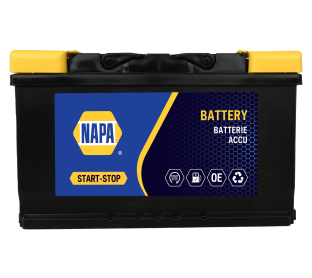
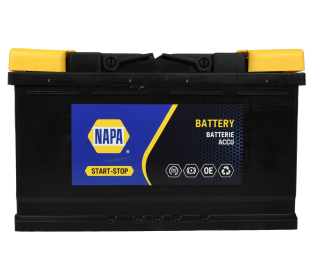
A start-stop battery supplies the starter motor with a larger current to allow a car to restart at the press of a pedal. Unlike a regular battery, this technology is sometimes called micro hybrid because it automatically switches off a car's engine when the vehicle is stopped. The point is to save fuel and help car manufacturers to cut CO2 emissions.
If your car has this feature and an AGM battery fitted, the replacement battery must be of the same technology and offer no poorer electrical performance. It's essential that the correct battery is fitted. If not, this will result in the vehicle not working.
A standard battery isn't meant to be discharged and recharged on a cycle in this way. It's only designed to start the car. So, AGM batteries can be replaced with AGM options while AFBs can be replaced with either AFBs or AGM batteries.
Related: What is the difference between Flooded, AGM and AFB batteries?
A standard starter battery is designed to generate a high-level electric current to start a car. Car batteries focus more on starting an engine but leisure batteries are designed with durability in mind. Leisure batteries can be used to power electrical appliances in caravans and motorhomes – providing a consistent supply of power over a longer period.
Car battery maintenance FAQs
There are many reasons why your car battery might keep going flat. The most common causes are corroded or loose connections, excessive electrical drains, or power demands on an alternator. Charging problems could also be the reason why you have a flat battery all the time.
Do you think that your car battery is dead because your car won't start? A potential option is to use jump leads to connect your flat battery to another car's charged battery.
You'll need to ensure that the leads are connected, noting the correct polarity: (+) and (-). It is also essential to refer to the manufacturer's handbook first. The ECU (engine control unit) in some cars can be damaged if they are jump-started so always check the handbook to see if that is the case for your vehicle.
Related: How to jump start a car
Ever gone to start a car to find that it's unresponsive and lifeless? If this is the case, the culprit is most likely to be a flat car battery. For more details, read our expert guide on how to start a car with a flat battery.
If a car battery is not recharging, this can indicate a mechanical issue. This is most likely going to be with the alternator, which should be generating energy to charge the battery.
If you have a multimeter, you can test your car battery at home. When using a multimeter, it's important to be aware that your battery should have no fewer than 12.6 volts.
Of course, there is another option if you want your car battery testing. Simply pop down to your local National Tyres and Autocare branch for a FREE battery test. Our technicians use the latest equipment to test a battery's voltage, start capacity and condition.
Related: How to test a car battery?
With the right tools and information, it's possible that you can fit a car battery replacement yourself. We even have a helpful guide on how to change a car battery for you to use. But our advice will always be to book in for an appointment and let our expert installers take care of everything.
There are many ways to charge a car battery at home, at work or wherever you find yourself. In some cases, however, a dedicated charger may be needed. For more details, see our expert guide on how to charge a car battery.
A battery charger is a device that forces an electrical current (amps) through a flat battery. As you switch it on, a needle on the charger jumps to the desired amps. It then moves down as it charges the battery. When it gets to around the halfway point of the desired amps, the battery is fully charged.
A car battery voltage should be at least 12.6 volts if it's fully charged. Action will be required to recharge the battery once it's less than 75% charged and/or it reads 12.45 volts or fewer.
Not sure what voltage your car battery is? Is your battery showing a low reading? Pop into your local National Tyres and Autocare. One of our friendly technicians will be happy to carry out the necessary checks for you.
All plug-in electric and hybrid cars use lithium-ion batteries or nickel-metal hydride batteries. These store energy over time, so have a much greater energy capacity.
Car batteries have two main cycles. The first is a charge cycle that occurs when you're driving and charging the battery. The second is a discharge cycle that occurs when a battery uses its stored energy.
Battery terminals are the positive (+) and negative (-) post-like structures that you'll find either at the top or to the side of a car battery. Some batteries actually feature both and are known as 'dual terminals'. It's also worth noting that these terminals come in different sizes.
If you need to jump-start a battery, you'll first need to connect the positive terminal before the negative one. If you do it the other way around, you could short the circuit.
Our advice would always be to let one of our specialists disconnect and remove the battery for you. If you need to do it yourself, however, there are a few important steps to follow first. Our guide on how to disconnect a car battery has all the information that you need to do it safely.
You should never dispose of car batteries in a household bin. Not only is this dangerous due to the hazardous waste but it is also against the law.
Most landfill sites and household waste centres will accept used car batteries – but we can save you a trip to the tip! Just pop down to your local National Tyres and Autocare centre and we'll dispose of the battery.
We only use registered environmental waste carriers – so rest assured that we'll dispose of it safely and responsibly.
An alternator is commonly associated with the battery. It converts the engine's energy into an electrical current for the battery. This in turn powers the electrical system. For this reason, your alternator can be a good first place to investigate if your car battery isn't working.
Car batteries glossary
CCA is the rating that states a battery's ability to start a car's engine in cold weather. This is also referred to as 'starting capacity'.
RC is the time in minutes that it takes for a battery to discharge 25 amps while maintaining at least 10.5 volts.
Ah is the number of amps that the battery can provide over a period of 20 hours – e.g. a 100h battery can deliver five amps for 20 hours.
AGM is a material made up of glass microfibers. It's used as a separator in a battery – with the microfibers absorbing the battery acid (electrolyte) to avoid spillage.















 Sign up for SPECIAL OFFERS